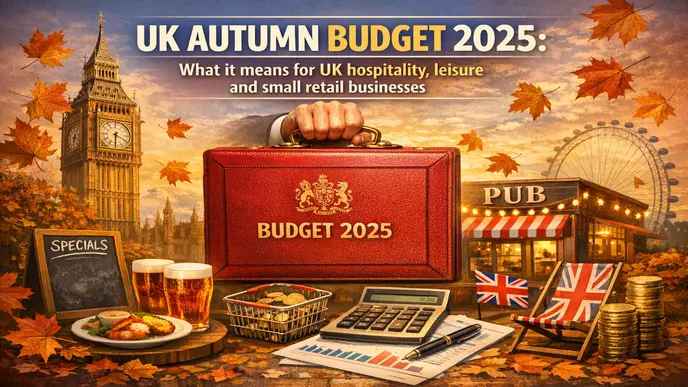



UK Autumn Budget 2025: What it means for UK hospitality, leisure and small retail businesses
 Sakkun Tickoo
-
Sakkun Tickoo
-
Rising wages and costs are squeezing margins in the UK hospitality, leisure and retail sectors. The Autumn Budget 2025 offers limited relief, but higher pay and operating costs remain. Steps like menu optimisation, staffing and energy efficiency, alongside Open Banking adoption, can help cut costs.
Table of contents
The Autumn Budget 2025 delivers a mixed set of outcomes for the UK’s hospitality, leisure and small retail sectors. While the Government’s decision to make business rates relief permanent for smaller properties is welcome, many operators will see these savings quickly eroded. The sharp rise in the National Living Wage, combined with ongoing staffing shortages, will push up labour costs significantly, with the hospitality sector alone facing an estimated £1.4 billion in additional wage pressure.
For businesses already operating on tight margins, this Budget intensifies the challenge of remaining profitable. That’s why many operators are now prioritising cost reduction strategies that deliver immediate savings, rather than waiting for longer-term policy changes to take effect.
One area offering fast, tangible relief is payment processing costs. Traditional card payment fees, typically 1.5% to 3% per transaction, continue to drain cash flow for pubs, cafés, restaurants, hotels and independent retailers. By switching to open banking payments, businesses can cut these costs by up to 90%, saving thousands of pounds annually without compromising customer experience or raising prices.
As rising wage bills collide with ongoing cost pressures, the Autumn Budget makes it clear: operators must act now to protect profitability, strengthen cashflow and build financial resilience for 2025 and beyond.
Autumn Budget 2025: The real impact on hospitality, leisure and independent retail
The 2025 Autumn Budget presents a mixed outlook for the country’s hospitality, leisure and independent retail sectors. The Government has confirmed that eligible businesses will receive 40% business rates relief for 2025/26, compared with the temporary 75% relief available in the current year. This offers continued support for high-street operators, though it marks the beginning of a phased return to full rates liability. Further updates to funding arrangements and rates multipliers, planned for 2026/27 onwards, add another layer of uncertainty for businesses trying to plan ahead.
Alongside these changes, the Government has confirmed a significant increase in the National Living Wage, which will rise to £12.71 from April 2026, with the 18 to 20 age band increasing to £10.85. For labour-intensive sectors such as hospitality and leisure, these increases will materially lift staffing costs and put additional pressure on already tight margins.
The reality for operators is clear: the Budget provides targeted financial support, but it also commits businesses to higher long-term labour costs. As a result, many pubs, restaurants, cafés, hotels, leisure centres and independent retailers now face urgent decisions about staffing levels, pricing, investment priorities and operational efficiencies.
This article breaks down the key measures in the Autumn Budget 2025, explains their real-world impact across various business types, and outlines practical steps operators can take immediately. From menu engineering and productivity improvements to modernising payment systems for small businesses, to reduce card fees, these recommendations are designed to help businesses strengthen resilience and protect profitability in the year ahead.
Key Budget measures affecting hospitality, leisure and independent retail
The Autumn Budget 2025 introduces several key measures that will reshape the cost base for hospitality, leisure and small retail businesses over the next year. Understanding these changes is essential for operators planning cashflow, payroll, investment and pricing strategies. Two areas in particular will define how businesses enter 2026: transitional business rates relief for 2025/26 and the confirmed National Living Wage increases recommended by the Low Pay Commission.
Business rates relief for smaller RHL properties (Rateable value under £500,000)
The Government has confirmed a Retail, Hospitality and Leisure (RHL) relief scheme for 2025/26, offering 40% business rates relief on eligible occupied properties, up to a cash cap of £110,000 per business. Although still meaningful support, this represents a step down from the current 75% relief, meaning many operators will see a net increase in rates payable depending on their property’s rateable value, occupancy status and previous reliefs.
From 2026/27, the Government intends to introduce two permanently lower rate multipliers for RHL properties with rateable values below £500,000, alongside a higher multiplier for properties at £500,000 or above to fund the change. The aim is to rebalance the high street, support smaller operators and provide greater long-term certainty.
Businesses must also consider Subsidy Control Rules, which limit the total relief a business can receive over a rolling period. Operators that have previously claimed support must therefore track historic reliefs carefully to avoid breaching thresholds.
Labour cost increases: Higher National Living Wage
The Budget confirms acceptance of the Low Pay Commission’s recommendations to increase the National Living Wage to £12.71 for workers aged 21 and over from April 2026, with the 18 to 20 age group rate rising to £10.85. For hospitality, leisure and retail sectors heavily reliant on younger, hourly paid and part-time staff, this creates a substantial uplift in wage bills.
Industry analysis indicates the hospitality sector alone could face around £1.4 billion in additional annual labour costs. For many operators whose payroll already exceeds one-third of turnover, even small percentage increases in hourly wages can significantly erode gross margins.
Businesses should incorporate these figures into 2026 budget planning, including scenario modelling around staffing mix, rota efficiency, productivity improvements and pricing strategy.
Other operating cost pressures will continue
Beyond wages and rates, the Autumn Budget does not offset several ongoing pressures affecting operators in 2025 and 2026:
- Energy costs remain above pre-pandemic levels in many regions.
- Supply chain inflation continues across food, drink, cleaning products and disposables.
- Insurance premiums are still elevated for pubs, late-night venues, gyms and leisure facilities.
- Commercial rents continue to rise in many urban and visitor-economy hotspots.
- Compliance costs: Licensing, health and safety, food safety and fire safety add unavoidable administrative overheads.
Individually, these increases may appear modest, but collectively they create a multi-vector cost squeeze that business-rate relief alone cannot resolve.
Operators therefore need a portfolio approach to cost control, combining quick wins (such as reducing card payment fees) with medium-term operational improvements.
Why understanding these budget measures matters
With these financial pressures clearly defined, it becomes essential to understand how the Autumn Budget 2025 will affect different types of hospitality, leisure and retail businesses in practice. The distribution of impacts varies significantly between pubs, cafés, restaurants, hotels, gyms, visitor attractions and independent shops—and knowing where the pressure points lie helps operators prioritise actions that protect profitability.
Autumn Budget 2025: How the impact differs across hospitality, leisure and retail
The Autumn Budget 2025 affects hospitality, leisure and small retail businesses in very different ways. While some operators will experience genuine relief through lower business rates, others will continue to face intense pressure from rising labour costs and persistent inflation in core overheads. Understanding these differences is essential for predicting how the next 12 to 18 months will unfold.
Smaller venues gain stability but not full relief from costs
Independent pubs, cafés, restaurants, boutique hotels and small retail shops stand to benefit most from the lower business rates multipliers introduced for properties under £500,000 RV. For many of these operators, the shift to 40% relief for 2025/26 and the promise of permanently lower multipliers from 2026/27 will reduce annual rates bills and improve cashflow.
These savings may support small, high-street businesses by funding essential repairs, marketing activity or minor refurbishments. However, this relief does not insulate them from increasing wage bills and localised cost inflation. A small café with a handful of full-time equivalent staff might save a few thousand pounds on rates but still face labour-cost increases several times larger.
For most smaller operators, the benefit is best understood as short-term breathing room, not an opportunity for significant reinvestment or expansion.
Labour-intensive operations face the greatest pressure
Restaurants, hotels, larger pubs and leisure centres, businesses where staffing makes up a high proportion of operating costs, will feel the wage increases in the National Living Wage most acutely.
- Hotels with substantial housekeeping, reception and food-service teams will see a pronounced jump in annual payroll costs.
- Mid-sized restaurants with 15 to 30 employees may face wage-bill increases running into the tens of thousands of pounds.
- Gyms, fitness centres and entertainment venues, which rely heavily on part-time staff, will experience wage inflation across multiple roles simultaneously.
- Larger pubs with kitchens face a double hit: wage increases across both front- and back-of-house teams alongside higher food input costs.
For these labour-heavy operations, business rates relief alone cannot offset rising payroll costs. Without action to improve productivity, redesign operating models or optimise pricing, many will face shrinking margins.
Margins set to tighten across hospitality, leisure and retail
When combined, higher wage costs, only partial business rates relief, rising supplier prices, and elevated overheads, operators across hospitality, leisure and retail are likely to experience margin compression.
Most businesses face a familiar trio of options:
- Absorb the cost increases, reducing already thin profit margins.
- Raise prices, risking weaker demand or lower footfall.
- Redesign operations to reduce labour intensity and improve efficiency.
The most resilient operators will use a balanced strategy, including targeted price adjustments, menu or product rationalisation, rota optimisation, and cost-saving innovations such as reducing card payment fees.
What this means for operators
Understanding how the Autumn Budget 2025 affects different types of businesses is the first step. The priority now is to identify practical actions that can protect profitability, stabilise cash flow and reduce unnecessary operating costs. The next section sets out the fastest and most effective measures operators can take to safeguard margins in the year ahead.
What hospitality, leisure and retail businesses should do to address the Autumn Budget impact
With costs rising on several fronts following the Autumn Budget 2025, operators need to respond quickly and confidently. Small, well-timed adjustments can have a significant impact on cash flow, labour efficiency and profitability. The steps below focus on practical, high-ROI actions that hospitality, leisure and retail businesses can implement immediately.
1. Review menu pricing and service models
Start with menu engineering, using item-level data to identify dishes or products with the strongest margins and sales volumes. Selective price increases on premium or speciality items can help offset wage increases, while keeping entry-level favourites stable to protect footfall.
Other opportunities include:
- Rationalising SKUs to reduce waste and simplify procurement.
- Adjusting portion sizes carefully to maintain perceived value.
Introducing hybrid service models, such as QR-code ordering, counter collection or partial table service, to reduce labour minutes per cover without compromising guest experience.
These changes help maintain margin while keeping the offer attractive to price-sensitive customers.
2. Strengthen procurement and supplier negotiation
With food and supply costs still elevated, smarter procurement can deliver immediate savings:
- Consolidate orders to leverage volume discounts.
- Explore local sourcing to reduce freight and supply-chain volatility.
- Use group purchasing organisations for core product categories.
- Renegotiate supplier credit terms to improve cashflow.
- Conduct regular reviews of waste and spoilage to identify quick wins.
Even modest reductions in unit costs can translate into meaningful bottom-line improvements.
3. Reduce energy consumption and operational waste
Energy remains a high cost for pubs, cafés, restaurants, hotels and leisure centres. Target low-cost efficiency changes first, such as:
- Switching to LED lighting and reviewing thermostat schedules.
- Optimising kitchen ventilation and equipment run-times.
- Comparing energy suppliers for better tariffs.
Where capital investment is viable, high-efficiency ovens, fridges or HVAC systems often offer 12 to 36 month payback periods. Improving forecasting, reducing food waste and implementing waste-to-value programmes also cut overheads while strengthening sustainability credentials.
4. Optimise labour through rostering, multiskilling and technology
With wage increases confirmed for 2026, labour optimisation is essential. Operators should:
- Use data-led rostering based on historic trading patterns.
- Cross-train teams to cover peak tasks more flexibly.
- Introduce labour-saving tools such as kitchen display systems, mobile ordering and automated reservation confirmations.
- Simplify menus and operations on quieter days to match labour intensity to revenue.
These steps help operators maintain service quality while controlling payroll growth.
5. Increase local visibility and drive footfall
Local marketing continues to deliver high returns for hospitality, leisure and retail businesses:
- Keep Google Business Profiles current and encourage customer reviews.
- Use social media and email marketing to promote off-peak deals, events and new menus.
- Collaborate with neighbouring businesses to create cross-referral opportunities.
- Run events, tastings or themed evenings to position your venue as a local destination.
These tactics boost footfall without requiring large advertising budgets.
Why immediate action matters
Operational improvements help build resilience, but many businesses need faster, measurable financial relief. One of the most immediate opportunities lies in reducing payment processing costs, an area where switching from card payments to open banking can deliver rapid, substantial savings and relieve the pressure created by rising wages and operating costs.
Reduce costs by switching from card payments to Open Banking
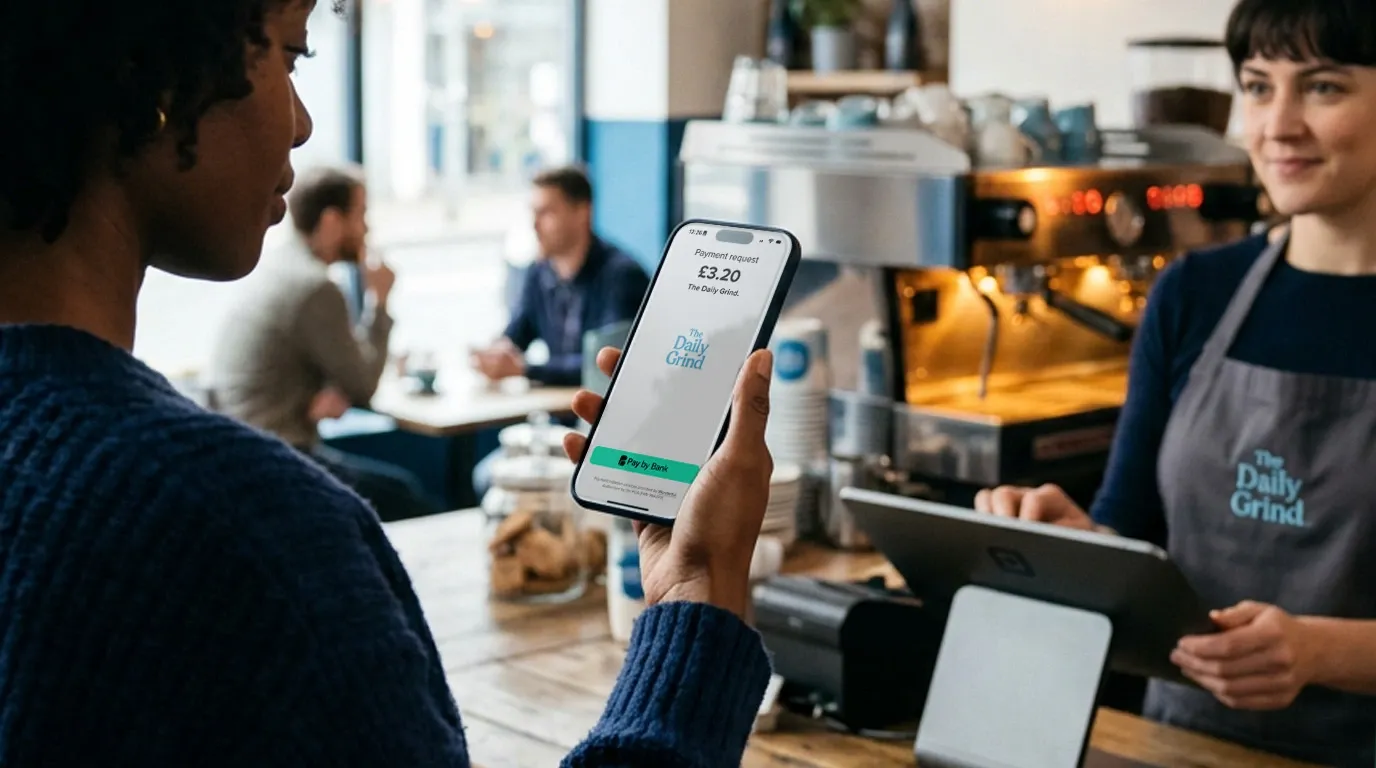
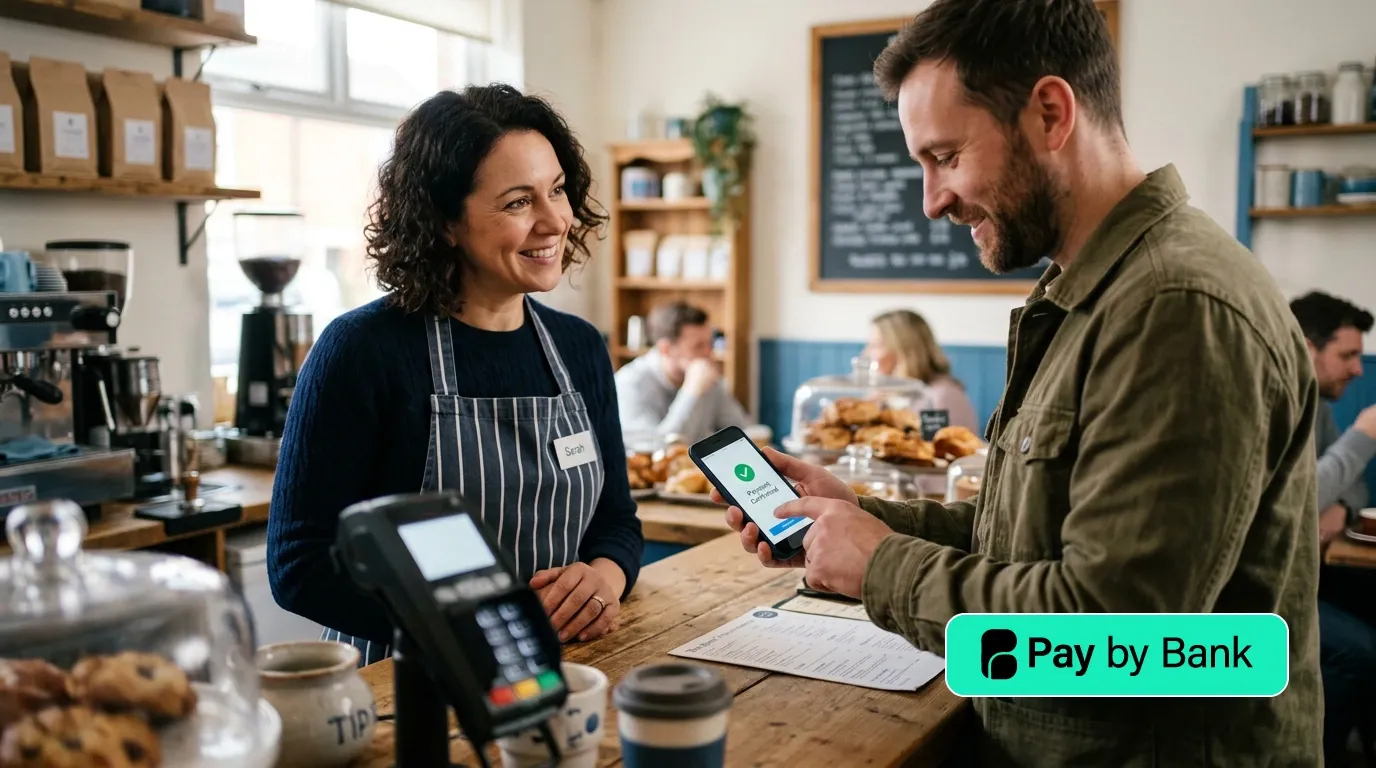
Lowering payment processing fees is one of the fastest ways to protect margins without affecting customer experience. Card processing fees typically range from 1.5% to 3% for consumer transactions and can be significantly higher for certain card types or e-commerce setups. Payment providers such as Wonderful offer Open Banking payment options suitable for use in hospitality and retail environments, making meaningful fee reductions practical without disrupting customer experience. For many operators, these fees represent a material, recurring drain on margins.
Open Banking payments are account-to-account transfers authorised directly by the customer, which bypass card schemes and their interchange fees, significantly reducing payment costs. Adoption has accelerated rapidly, with the Open Banking Impact Report showing increasing payment penetration among digitally confident consumers, making Open Banking a credible mainstream option.
Hospitality and small retail businesses are among the hardest hit by card fees, which often exceed 2% to 3% and erode already thin margins. These sectors are particularly exposed:
- Restaurants: High transaction volumes and modest average spends make percentage fees highly damaging.
- Bars: Frequent low-value transactions generate substantial cumulative fees.
- Pubs: Repeated small payments throughout service periods drive up card costs.
- Cafés: Low average transaction values mean card fees absorb an outsized share of revenue.
- Boutique shops: Independent retailers lack the scale to negotiate competitive card rates.
- Gyms and leisure centres: Recurring membership payments and POS purchases generate consistent monthly processing costs.
- Hotel add-ons: Spa, room service and ancillary charges incur separate fees.
- Event venues: Deposits, instalments and on-site purchases create multiple fee layers.
While many businesses focus on labour, procurement and energy costs, card fees remain an often-overlooked controllable expense. Shifting payments from card networks to direct bank transfers can reduce payment costs by up to 90%, offering rapid financial relief precisely when operators need it most.
Why Open Banking delivers immediate financial relief
Open Banking allows customers to pay directly from their bank account to a merchant’s account, bypassing Visa, Mastercard and acquirer fees. Providers such as Atoa enable fast, secure, real-time bank-to-bank payments.
The cost-benefit is substantial. For example, a restaurant processing £500,000 annually at a 2% card fee pays £10,000 in processing costs. Switching to Open Banking could reduce this to £1,000 to £2,000, a saving of £8,000 to £9,000, enough to cover a significant portion of the National Living Wage increase or fund new equipment.
Wonderful exemplifies this shift, offering instant Open Banking payments and simple QR-based customer flows. Their pricing charges just 1p per transaction after the included allowances, not a sector-specific rail, but a low-cost payment method that happens to work well for hospitality and retail use cases. Businesses can eliminate percentage-based fees entirely and rely on clear, predictable costs.
Four key advantages for hospitality and retail businesses
1. Lower transaction fees
- Many providers charge 0.2% to 0.5%, versus card rates of 1.5% to 3%.
- Wonderful charges a flat 1p per transaction, cutting percentage fees completely.
2. Instant settlement
- Payments settle in seconds via Faster Payments.
- Eliminates 2 to 5-day card settlement delays and reduces reliance on overdrafts.
3. Works across multiple payment scenarios
- Table payments via QR codes
- Deposits for events, bookings and room reservations
- Online bookings via integrated payment links
- Gift card sales via low-fee account transfers
- Retail checkout QR payments
- Memberships/subscriptions for gyms and leisure centres
Over 14 million UK users now engage with Open Banking services, and adoption continues to grow. Lloyds Bank reported a 25% increase in usage from 2022–2023 and a further 42% increase from 2023–2024.
Payment platforms like Atoa make Open Banking easy to use for restaurants, salons, gyms, law firms and many other sectors. The same technology that cuts transaction fees can also increase revenue through frictionless tipping and faster service.
Real-world application
A mid-sized restaurant processing £750,000 per year at a 2.2% card fee pays £16,500 annually. Shifting just 60% of transactions to Open Banking at an effective 0.3% reduces total payment costs by over 50%, saving £8,500 to £9,000 per year. Solutions like Wonderful, with straightforward QR flows and low fixed-fee pricing, allow operators to capture these savings quickly, without relying on sector-specific rails.
Open Banking is especially advantageous for high-value items such as event deposits, private dining bookings and gift card sales, where percentage-based card fees are most punitive.
Implementation practicalities and barriers
Switching to Open Banking is not entirely frictionless. Businesses should consider:
- Customer education and familiarity
- Staff training
- POS and booking system compatibility
- Ensuring strong authentication and clear receipts
- Straightforward refund and reconciliation processes
A low-risk starting point is to pilot Open Banking for a single flow, such as deposits or table QR code payments, before fuller rollout.
Long-term outlook for UK hospitality and retail
The long-term competitiveness of the UK’s hospitality, leisure and retail sectors will be shaped by three structural forces: rising labour costs, accelerating digital adoption, and growing expectations around sustainability and supply chain resilience. Businesses that respond early to these shifts will be in a stronger position to protect margins and retain customer loyalty through the next economic cycle.
Structural labour inflation will continue
Labour price pressures are unlikely to ease. The Government has signalled its ambition for the National Living Wage to rise towards a higher share of median earnings over time. This suggests that wage inflation is not a temporary spike but a structural, long-term cost trend for the UK hospitality and retail sectors.
This makes investment in labour-saving processes more important than ever. Operators will need to focus on:
- reducing the labour minutes per customer served
- redesigning workflows to minimise staff bottlenecks
- adopting technology that improves productivity without harming service
The business case for these investments strengthens every year wages rise.
Digital adoption will accelerate across the sector
The next wave of sector competitiveness will be defined by the venues that blend digital convenience with strong in-person service. UK operators can expect continued acceleration in:
- Flexible payment options including Open Banking and instant-pay technologies
- Online ordering, digital menus and mobile self-serve
- CRM and loyalty programmes driven by first-party customer data
- Automation in kitchens, back-of-house operations and stock management
- Integration of payment systems and mobile POS for smoother service and better reporting
Digital maturity will increasingly differentiate businesses with resilient revenue from those that struggle to keep pace.
Sustainability and supply chain control become key differentiators
Consumer preferences continue to shift. UK diners and shoppers increasingly reward businesses that can demonstrate:
- responsible sourcing and supply chain transparency
- effective waste reduction, particularly food and packaging waste
- measurable improvements in energy efficiency
- clear commitments to environmental and social impact
These priorities are no longer niche. For many customers, especially younger demographics, sustainability influences where they choose to spend.
Investing in medium-term upgrades such as energy-efficient equipment, better waste-management systems, and digital supply-chain tools will deliver both cost savings and brand benefits.
Businesses taking a portfolio approach will win
The operators best positioned for long-term success will be those who combine:
- Immediate cost control (labour, procurement, payments)
- Smart medium-term investments in technology and efficiency
- Long-term strategies that enhance customer experience and loyalty
By balancing quick wins with strategic improvements, hospitality and retail businesses can build a more resilient operating model that performs strongly even against ongoing cost pressures.
Adapting to the post-budget reality for UK hospitality, leisure and retail
The months ahead will require UK hospitality, leisure and retail operators to balance careful planning with decisive action. By understanding the implications of the Autumn Budget 2025 and focusing on the levers they can directly control, businesses can stay resilient despite rising operating costs. Early action, not reactive firefighting, will be the defining trait of the strongest operators.
A Budget that provides support but also confirms higher costs
The Autumn Budget 2025 delivers targeted support for high street operators through continued business rates relief and a clearer long-term approach to RHL multipliers. However, the budget also confirms a significant National Living Wage uplift, which will materially increase staffing costs across labour-intensive venues such as pubs, cafés, restaurants, hotels and leisure facilities.
For smaller operators, the reduced multipliers and transitional relief will improve short-term cash flow, but rising labour and input costs mean survival depends on comprehensive operational action rather than passive reliance on government support.
Resilience requires action on multiple fronts
In the current cost environment, operators need to control the variables they can influence. This means taking a portfolio approach across:
- Menu and service model reviews to protect margins
- Smarter procurement and supplier negotiation
- Energy efficiency improvements to reduce ongoing overheads
- Labour optimisation and smart scheduling
- Modern payment solutions that cut unnecessary transaction costs
Taken together, these steps help offset the structural cost pressures the sector now faces.
Open Banking offers fast, measurable financial relief
Among all available levers, payment modernisation is one of the fastest routes to immediate savings. Open Banking payments reduce reliance on expensive card-processing networks, providing lower fees, instant settlement and reduced fraud risk, all of which improve cash flow and profitability.
Providers such as Wonderful offer a practical way for operators to adopt Open Banking quickly, with low fees, simple QR-led journeys and easy integration with existing workflows. For businesses battling rising wage bills, the ability to cut recurring payment costs, without affecting customer experience, is a powerful and often overlooked opportunity.
Take action: Start reducing your payment costs today
Reducing payment processing fees remains one of the fastest, most controllable ways to protect margin in a high-cost environment. A short review of your payment flows can quickly reveal where money is being lost and where Open Banking payment options can help you keep more of every transaction. Acting now puts operators back in control of a rising cost base.
The time to act is now.
Control the costs you can influence. These steps deliver immediate and measurable savings:
Step 1: Calculate your true payment processing costs
Review the last three months of merchant statements and calculate your actual blended fee rate across card types, channels and surcharges. Most operators underestimate this number.
Step 2: Identify where Open Banking can replace cards
Look first at deposits, event bookings, gift cards, and at-table QR payments — areas where customers already expect convenient digital journeys.
Step 3: Compare providers and choose the right fit
Evaluate providers such as Wonderful, Atoa, TrueLayer and GoCardless for:
- Integration with your POS system and booking and ordering systems
- Pricing transparency
- Settlement speed
- Refund and reconciliation flows
Prioritise platforms offering simple staff workflows and low-friction customer journeys.
Step 4: Pilot a single payment flow
Run a focused two-month trial for one use case. Measure:
- Customer uptake
- Operational impact
- Net savings after any implementation costs
This establishes real-world ROI before broader rollout.
Step 5: Train frontline teams
Well-trained staff drive adoption. Equip teams to present the option confidently and support customers using QR or app-based payment flows.
Step 6: Expand gradually and monitor performance
Roll out in stages, track adoption, review settlement and reconciliation, and collect customer feedback. Reinvest initial savings into high-return improvements that increase throughput or productivity.
Start today. Every month without action allows avoidable fees to erode margins that are already under pressure. Incremental gains across payments, procurement and labour management compound into genuine financial resilience for UK hospitality, leisure and retail operators.
FAQ: UK Autumn Budget 2025: Hospitality, leisure and retail
How will the Autumn Budget 2025 affect my hospitality or retail business in the UK?
The Budget offers business rates relief for smaller venues and updates RHL multipliers. Rising wages and input costs mean operators must optimise menus, staffing, energy, and payments to protect margins.
What impact does the National Living Wage increase have on UK hospitality?
From April 2026, wages rise to £12.71 (21+) and £10.85 (18 to 20s). Labour-heavy businesses face higher payroll costs, so efficiency, pricing, and operational changes are essential.
How can I reduce costs in my café, pub, or retail shop?
Focus on menu and service optimisation, supplier renegotiation, energy efficiency, labour scheduling, and adopting Open Banking to lower card fees and improve cash flow.
What is Open Banking and how does it help my business save money?
Open Banking allows direct bank-to-bank payments, bypassing card networks. Fees drop from 1.5% to 3% to 0.2% to 0.5%, settlements are near instant, and chargebacks are nearly eliminated.
Which Open Banking providers are suitable for UK hospitality and retail?
Providers like Wonderful, Atoa, TrueLayer, and GoCardless offer low-cost, easy-to-integrate solutions. Choose based on pricing, POS/booking integration, settlement speed, and refund management.
How do I start using Open Banking in my business?
Review card fees, identify suitable flows (deposits, QR table payments, gift cards), pilot one flow, measure savings, train staff, then expand gradually while monitoring adoption and reconciliation.
How can small hospitality and retail businesses protect margins now?
Combine short-term cost control with medium-term investments: optimise menus, reduce waste, streamline labour, and adopt Open Banking to cut payment fees and improve cash flow.
How can I manage rising labour costs effectively?
Use data-driven rostering, cross-train staff, implement peak/off-peak schedules, and explore technology solutions to reduce labour minutes per customer while maintaining service quality.
What practical steps can I take to cut energy and waste costs?
Switch to LED lighting, optimise thermostats and ventilation, invest in energy-efficient equipment, reduce food waste through forecasting, and negotiate supplier energy contracts.
How can I future-proof my hospitality or retail business against cost pressures?
Adopt a portfolio approach: control immediate costs, invest in digital payments, loyalty, and automation, and plan for sustainability and productivity improvements to stay competitive long-term.