Table of contents
Most small businesses think they understand what they pay for card payments.
A percentage here. A small fixed fee there. Job done.
But the reality is more complicated, and more expensive.
This post breaks down the actual cost of accepting cards in the UK, and why more businesses are now looking at Pay by Bank as a serious alternative.
What businesses think they pay
Ask a typical SME what their card costs are, and you’ll usually hear something like:
- “About 1.5%”
- “Maybe 2% all in”
- “It depends on the card”
That’s not wrong, but it’s incomplete. Those headline rates rarely reflect the true picture.
What businesses actually pay
Card payments involve multiple layers of cost. Even if they’re bundled into one fee, they’re still there.
1. Interchange fees
Paid to the card issuer (the customer’s bank). Typical UK consumer cards:
- Debit: ~0.2% (regulated cap)
- Credit: ~0.3% (regulated cap)
Commercial and international cards can be significantly higher.
2. Scheme fees
Paid to Visa or Mastercard. These are less visible, but include:
- Network access fees;
- Processing fees;
- Cross-border uplifts.
They vary by transaction type and are not always transparently passed through.
3. Acquirer margin
This is what your payment provider earns.
Often bundled into a “blended rate”, which makes it difficult to see the underlying components.
4. Terminal and infrastructure costs
For in-person payments:
- Monthly terminal rental;
- PCI compliance costs;
- Connectivity charges.
For online:
- Gateway fees;
- Plugin or platform costs.
5. Chargebacks and disputes
Often overlooked, but material:
- Administrative time;
- Lost revenue;
- Additional fees per dispute;
- Risk of penalties at scale.
A simple example
Take a small retailer doing £20,000 per month in card transactions.
At a blended rate of 1.7%, that’s:
- £340 per month
- £4,080 per year
Now add:
- Terminal rental: ~£20–£30/month;
- Occasional chargebacks;
- Settlement delays (more on that below).
The true cost is higher than the headline rate suggests.
The part most businesses miss: settlement delays
Card payments are not instant. Typical settlement timelines:
- 1–3 working days (best case);
- Longer for weekends, holidays, or risk reviews.
That delay has a real impact.
This matters
For small businesses, cash flow is operational:
- Paying suppliers;
- Managing stock;
- Covering payroll;
- Handling unexpected costs.
Waiting several days to access your own revenue creates friction. It also increases reliance on overdrafts or working capital facilities.
What Pay by Bank changes
Pay by Bank (Open Banking payments) removes several layers of the card model.
1. No card schemes
No Visa or Mastercard in the middle.
2. No interchange
No issuer fees.
3. Fewer intermediaries
A simpler payment flow, with fewer parties taking a cut. In the case of a Wonderful payment, we're the only processor in the mix. Far fewer mouths to feed.
4. Instant settlement
Funds move directly from the customer’s bank to yours, typically within seconds.
5. Strong customer authentication built in
Customers approve the payment in their own banking app. No card numbers. No manual entry.
Cost comparison (simplified)
| Payment type | Typical cost | Settlement speed | Intermediaries |
|---|---|---|---|
| Cards | ~1.5%–2.5% | 1–3 days | Multiple |
| Pay by Bank | Fixed, low | Instant | Minimal |
For many SMEs, that difference is meaningful within weeks.
What customers experience
There’s often concern about whether customers will understand or trust Pay by Bank.
In practice, the journey is straightforward:
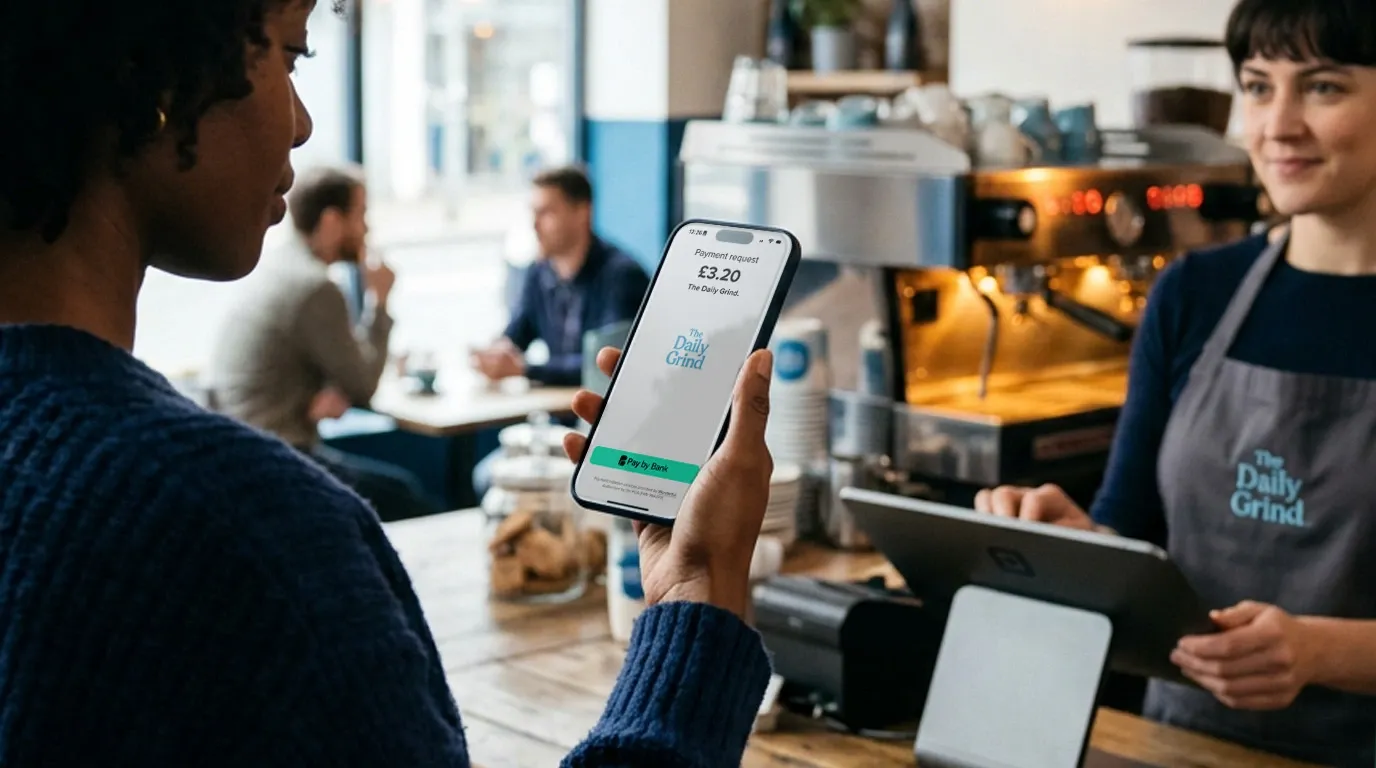
- Customer selects “Pay by Bank”;
- Chooses their bank;
- Is redirected to their banking app;
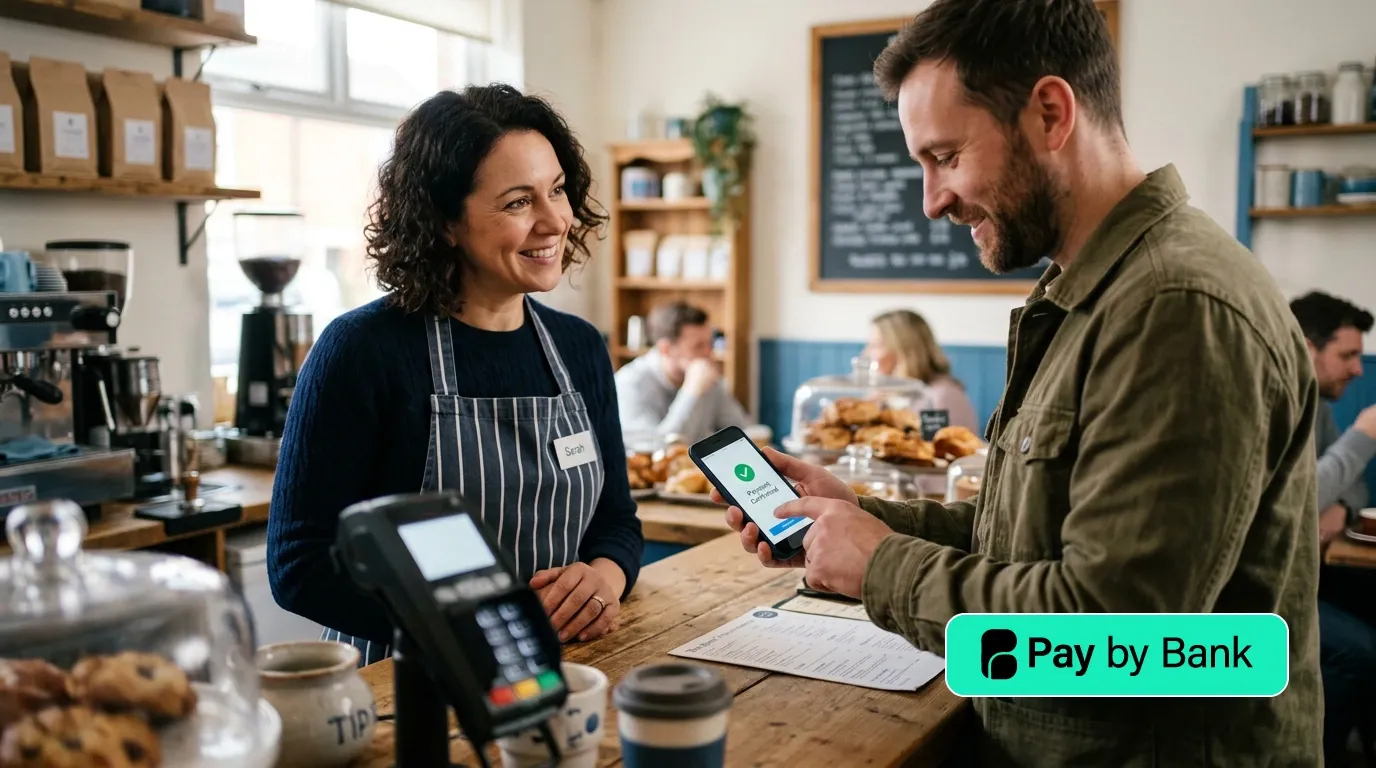
- Confirms the payment securely;
- Returns to the merchant with confirmation.
There is:
- No need to enter sort code or account number;
- No card details to type;
- No additional accounts to create.
It’s a familiar, bank-native experience.
Where it works best today
Pay by Bank is already well suited to:
- Online checkout;
- Payment links and invoices;
- QR code payments;
- High-value transactions where fees often matter most.
Many businesses now run it alongside cards, not as a replacement, but as a smarter default.
A more direct way to get paid
Card payments solved a problem in a pre-digital banking world. That world has changed. With real-time payments, secure bank authentication, and widespread Open Banking adoption in the UK, businesses now have a more direct option.
Lower cost is part of the story. Faster access to funds, fewer intermediaries, and a simpler payment flow are just as important.
How much could you save?
If you haven’t reviewed your payment costs recently, it’s worth doing properly.
Not just the headline rate. The full picture.
Because once you see it clearly, it becomes obvious there’s a better way to get paid.
See how much you could save using Wonderful's interactive savings calculator.
If you’d like to see how Pay by Bank works in practice, you can try it with Wonderful in a few minutes.