
Table of contents
Commercial Variable Recurring Payments have arrived
Commercial Variable Recurring Payments (cVRP) have moved from industry discussion to live transactions.
That transition may sound technical, but it represents one of the most significant developments in UK payments since Open Banking first enabled account-to-account payments nearly a decade ago.
For more than twenty years, recurring payments in the UK have largely relied on two mechanisms: Direct Debit and cards stored on file. Both have served consumers and organisations extremely well, supporting everything from utility bills and subscriptions to charitable donations and membership payments.
The payments landscape, however, has changed considerably since those systems were first introduced. Smartphones have become ubiquitous, Open Banking has matured into a national payment infrastructure, and consumers increasingly expect real-time visibility and control over their financial activity.
Commercial Variable Recurring Payments build upon those developments and introduce a new way to authorise recurring payments directly from a bank account.
This week, Wonderful completed its first live cVRP transaction. A single payment that represented an important milestone in the evolution of Open Banking payments and an opportunity to explore how recurring account-to-account payments may develop in the years ahead.
What is cVRP?
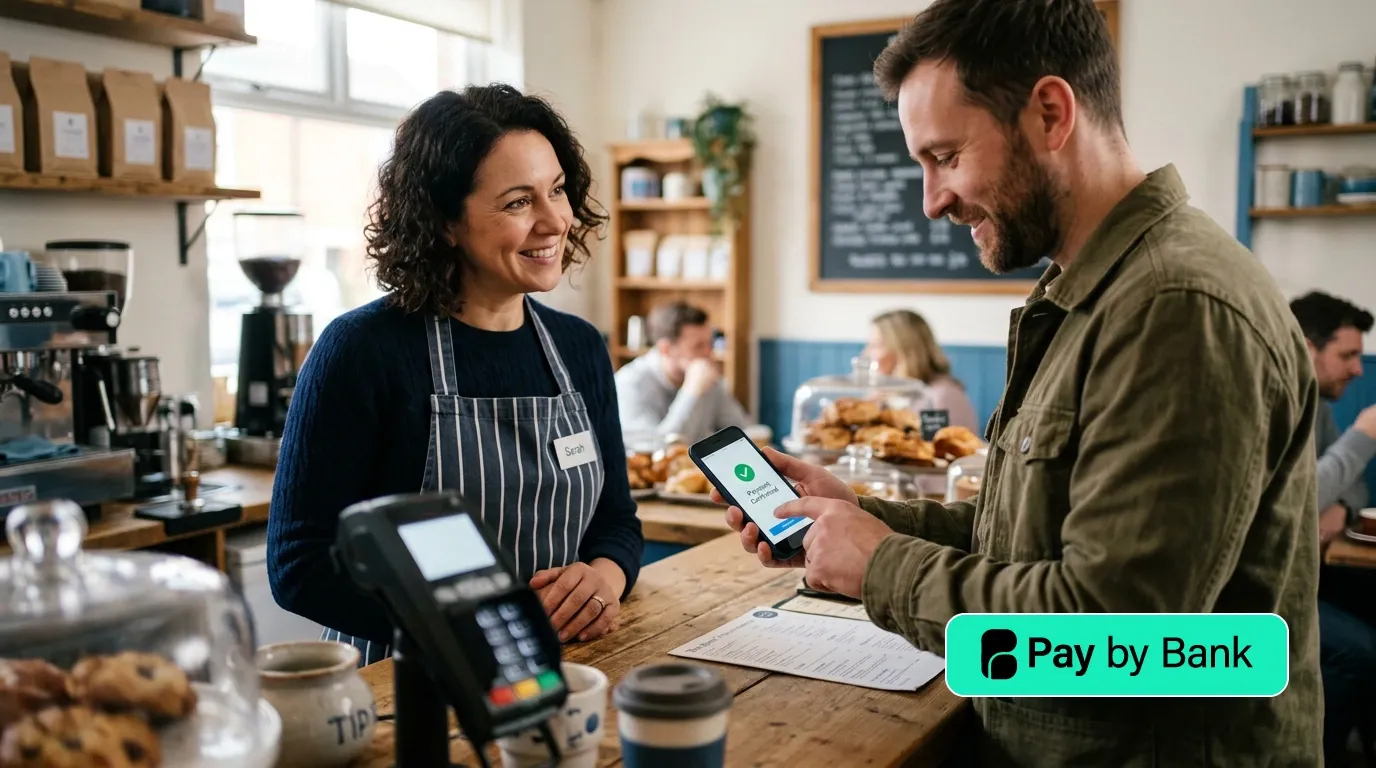
Commercial Variable Recurring Payments allow a customer to authorise a business or organisation to initiate recurring payments directly from their bank account within agreed parameters.
Unlike a standing order, payment amounts can vary over time.
Unlike card-on-file arrangements, the payment is initiated using Open Banking infrastructure rather than card networks.
Unlike traditional Direct Debit mandates, the customer journey is designed around modern digital consent and visibility.
Customers retain control over the authorisation while benefiting from a streamlined recurring payment experience.
The framework builds upon Variable Recurring Payments originally developed for Open Banking “sweeping” use cases and extends the concept into commercial payment scenarios.¹
Open Banking has reached meaningful scale
The emergence of cVRP is taking place against a backdrop of significant Open Banking adoption.
The UK Open Banking ecosystem now supports approximately 17 million users or user connections and processes more than 33 million payments every month.²
This data demonstrates that cVRP is not being introduced into an experimental environment. It is being built on top of an established infrastructure that already supports millions of consumers and businesses.
The conversation has evolved - from whether Open Banking payments work to how the infrastructure can support a broader range of payment experiences. And recurring payments are a natural next step.
Why charities should pay attention
Regular giving remains one of the most valuable forms of fundraising. Recurring donors provide predictability, improve financial planning and frequently contribute significantly more over their lifetime than one-off supporters.
Charities also face familiar challenges. Cards expire, replacement cards are issued, payment details change, and recurring commitments can lapse for reasons entirely unrelated to donor intent.
Because cVRP operates directly from a donor’s bank account, many of those challenges may become easier to address.
Potential advantages include:
- reduced dependency on card credentials;
- real-time account-to-account payment infrastructure;
- digital consent journeys;
- greater transparency and control for donors;
- simplified management of recurring commitments.
The technology is at an early stage, but the opportunity for innovation within fundraising is attracting significant interest.
Potential fundraising applications
Many use cases remain exploratory, and it will take time for best practice to emerge.
Even so, charities are already beginning to consider how cVRP could support:
- regular monthly giving programmes;
- challenge and event fundraising;
- emergency appeals requiring rapid donor response;
- membership and supporter schemes;
- donation journeys designed around greater donor control.
The ability to combine recurring payments with real-time bank infrastructure creates opportunities that have not previously existed within mainstream fundraising.
Greater visibility and control for donors
One of the most interesting characteristics of cVRP is its emphasis on transparency.
Historically, recurring payment arrangements often became invisible after setup. Many consumers rarely revisited subscriptions or commitments unless reviewing bank statements or investigating spending patterns.
The Open Banking model actively encourages a different approach.
Consent sits at the centre of the experience, giving consumers greater awareness of what they have authorised and creating clearer mechanisms for reviewing and managing those permissions.
For charities, this creates an opportunity to create meaningful, personal dialogue with supporters - and build recurring giving experiences that strengthen trust through visibility rather than relying solely on convenience.
A new payment rail alongside existing systems
It would be a mistake to view cVRP as an immediate replacement for Direct Debit or card-based recurring payments.
The UK already benefits from highly effective recurring payment infrastructure and those systems will continue to play an important role for many years.
A more useful way to think about cVRP is as an additional payment rail with characteristics that may suit particular use cases particularly well.
Coverage will expand. Standards will mature. User experiences will improve. The same pattern has occurred with every significant payment innovation, from Faster Payments to contactless cards and Open Banking itself.
The arrival of cVRP broadens the range of options available to organisations rather than narrowing them.
Why the first transactions are important
Every payment rail begins with a first transaction. Faster Payments, Open Banking payment initiation and contactless payments all started with small volumes before becoming part of everyday life.
The significance of the first cVRP transactions lies in what they demonstrate. They show that recurring Open Banking payments have moved beyond consultation papers, working groups and proof-of-concept discussions into real-world operation.
That transition from concept to execution is often the most challenging stage in the development of new payment infrastructure.
Wonderful’s first live cVRP transaction was completed in support of The Unity Project, a charity helping people affected by the UK’s No Recourse to Public Funds regime.
It was a single payment. It also represented the beginning of something much larger.
CEO perspective
“Our first live cVRP transaction was completed in support of The Unity Project. It was only a single payment, but it demonstrated that recurring Open Banking payments are beginning to move from theory into everyday use. The opportunity now is to explore how charities and donors can benefit from that new capability as coverage and adoption continue to grow.”
— Kieron James, CEO and Co-Founder, Wonderful
Conclusion
Commercial Variable Recurring Payments remain at an early stage of development, but the direction of travel is becoming increasingly clear.
Open Banking has already transformed one-off account-to-account payments across the UK. cVRP extends those principles into recurring payment scenarios and introduces new possibilities for charities, businesses and consumers.
There is still considerable work ahead. Coverage will continue to expand, standards will evolve and user experiences will improve as more organisations begin experimenting with the technology.
The first live transactions nevertheless demonstrate that the foundations have now been laid.
The future of recurring payments is unlikely to belong to a single payment method. Organisations will increasingly have access to a broader range of payment options designed for different needs, different audiences and different experiences.
cVRP has now joined that conversation.
Footnotes
- Open Banking Limited. Variable Recurring Payments overview. https://www.openbanking.org.uk/insights/variable-recurring-payments/
- Open Banking Limited. Open Banking reaches approximately 17 million users and processes more than 33 million monthly payments. https://www.openbanking.org.uk/news/open-banking-limited-marks-8-years-of-transforming-the-uks-financial-landscape/
- Financial Conduct Authority. Open Banking and payment initiation services. https://www.fca.org.uk/
- UK Payments Initiative. Commercial Variable Recurring Payments programme information. https://ukpayments.org.uk/