Table of contents
Introduction
Some small businesses save very little with Pay by Bank.
Others save thousands of pounds each year.
The difference is rarely about the payment provider itself. More often, it comes down to how the business gets paid, the average value of each transaction, how quickly it needs access to funds, and how exposed it is to percentage-based card fees.
This matters because small businesses are often discussed as though they all experience payment costs in the same way. In reality, the economics vary enormously between sectors and business models.
A café processing hundreds of small contactless transactions each day operates very differently from a trades business collecting £800 invoice payments remotely. Both may use the same card provider, but the commercial impact of payment fees can be completely different.
Understanding those differences is where the Pay by Bank conversation becomes more useful.
The businesses that feel card fee pain most sharply
Card fees become more visible as transaction values rise.
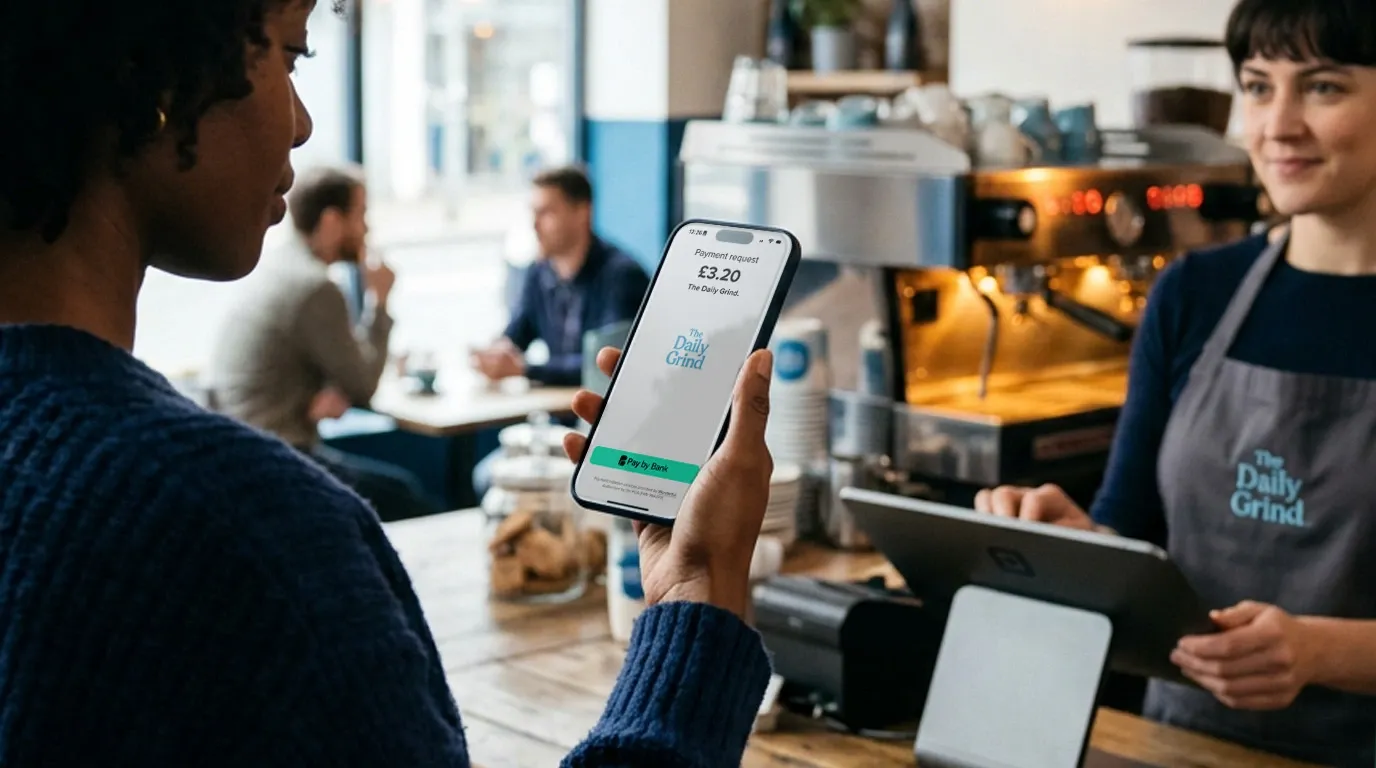
A business selling £4 coffees experiences payment costs very differently from a business collecting £400 invoices. The percentage may be identical, but the commercial impact is not.
This is one reason service-led businesses often see stronger results from Pay by Bank adoption than traditional retail environments. Many operate with larger average transaction values, tighter cash flow, and more remote payment collection, all of which increase sensitivity to processing costs.
Consider the difference between:
- a barber shop processing dozens of low-value in-person payments each day;
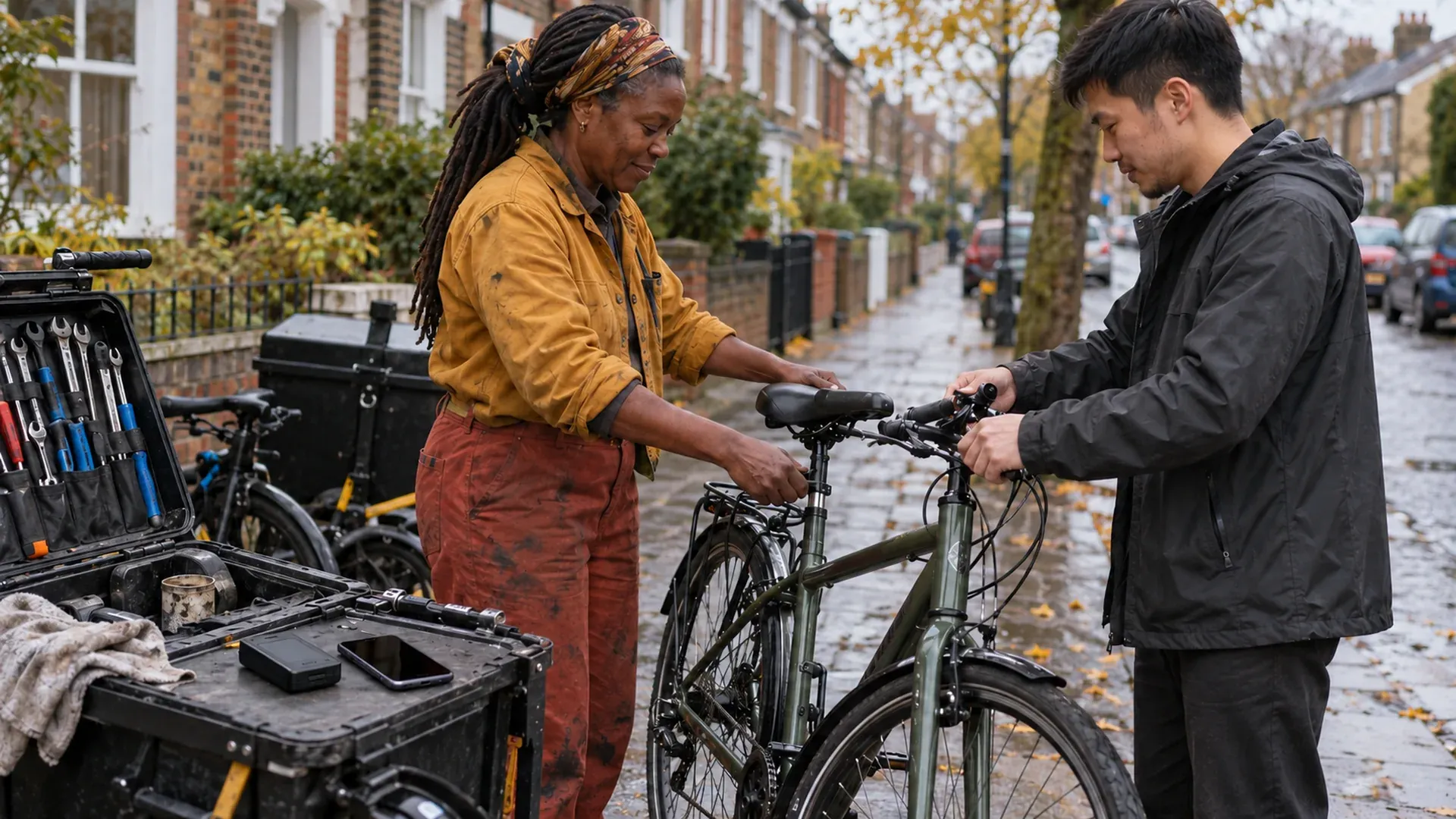
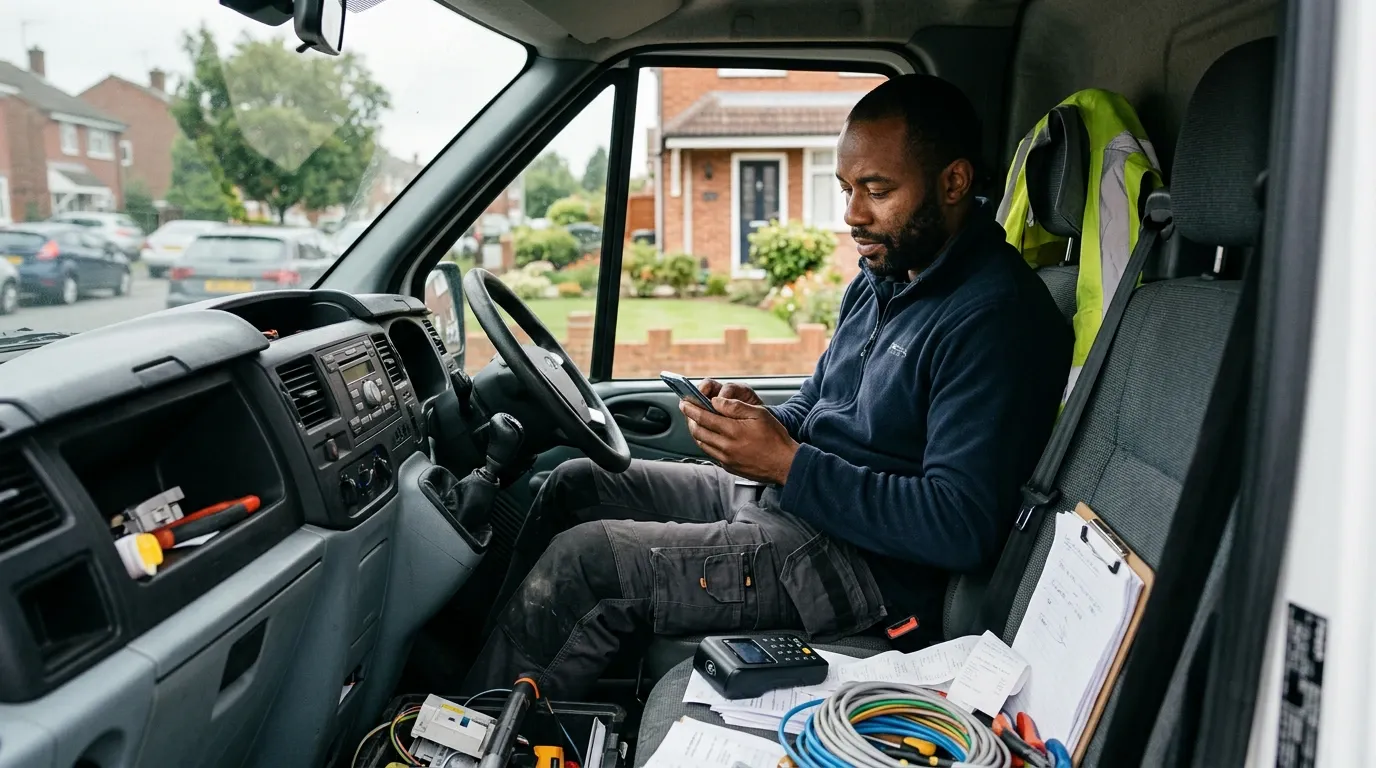
- an electrician collecting deposits and invoice payments remotely;
- a physiotherapy clinic taking recurring bookings and higher-value payments.
All three are “small businesses”, but the economics of payments look completely different in practice.
Why transaction value changes everything
Percentage-based pricing feels almost invisible at low values.
At £5 or £10, the fee attached to a card payment rarely attracts attention. Once transaction values begin climbing into the hundreds, the cost becomes materially more noticeable.
Take two hypothetical businesses processing the same £50,000 monthly revenue.
Business A:
- 10,000 transactions averaging £5.
Business B:
- 125 transactions averaging £400.
Even if both pay the same headline card rate, Business B will usually feel far more pressure to reduce payment costs because every individual transaction carries a larger absolute fee.
This is where Pay by Bank begins to change the economics more dramatically. The model becomes especially attractive where businesses are repeatedly paying percentage-based fees on larger invoice-style transactions.
Remote payments tend to amplify the difference
The gap widens further once payments move away from the physical till.
Many service businesses still collect payments through:
- bank transfer instructions sent manually;
- card payments taken over the phone;
- invoice links with embedded card fees.
These processes introduce friction, administration and cost simultaneously.
Pay by Bank fits naturally into this environment because payment links and account-to-account flows align well with how service businesses already operate. Customers are often paying after receiving an invoice, approving a quote, or confirming work completion. The behavioural shift is smaller than many businesses expect.
This is one reason adoption patterns increasingly differ by sector rather than simply by company size.
Margin sensitivity matters more than turnover
A business does not need enormous revenue for payment costs to matter. In many cases, margin sensitivity is more important than scale.
Businesses operating with:
- lower net margins;
- higher supplier costs;
- labour-intensive delivery models;
often feel percentage-based fees more acutely because those costs directly erode profitability.
This is particularly visible in sectors such as:
- trades and home services;
- hospitality;
- clinics and wellness businesses;
- independent professional services.
For these businesses, reducing payment costs can have a disproportionate impact because the saving flows directly to the bottom line.
Share of checkout is usually more important than full replacement
Another misconception is that businesses need customers to abandon cards completely before they see meaningful benefit.
In practice, that is rarely how adoption works.
Most businesses introduce Pay by Bank gradually and increase its share of checkout over time. The strongest results often come from targeting the areas where fees are already highest, rather than attempting to replace every payment method at once.
For example, a business might:
- continue accepting cards at the counter;
- introduce Pay by Bank for invoices and remote payments;
- use bank payments for higher-value transactions only.
This blended approach can materially reduce overall processing costs without disrupting customer behaviour.
Open Banking adoption in the UK has now reached 17 million users, with much of the growth concentrated in practical payment scenarios (more than 30m per month) such as account transfers, e-commerce and bill payments¹. Businesses increasingly use Pay by Bank alongside existing methods rather than as a wholesale replacement.
Some businesses will see only modest benefit
This is important to acknowledge honestly. Certain business models are already highly optimised for cards. Very low-value, convenience-led retail environments often prioritise:
- speed;
- familiarity;
- habitual customer behaviour.
Although pence-per-transaction fees can also sting, in these cases, the commercial difference may be relatively modest because:
- the transaction values are low;
- card usage is deeply ingrained;
- customers expect frictionless tap-to-pay behaviour.
Pay by Bank can still play a role, but the financial impact may be less dramatic than in service-led or invoice-heavy sectors.
The broader shift underway
What makes this significant is that payment strategy is increasingly becoming business-model specific.
Historically, small businesses largely accepted the same payment infrastructure regardless of sector. That is beginning to change as account-to-account payments create more flexibility around how different businesses collect money.
The question is no longer simply:
“What payment provider should I use?”
Increasingly, it becomes:
“Which payment method makes the most commercial sense for this type of transaction?”
That is a much more important distinction.
CEO perspective
“The businesses seeing the biggest impact from Pay by Bank are usually not the ones processing the highest volume. They are the ones where percentage fees compound in the background on larger or remote payments. Once businesses understand where those costs actually sit, the economics become very compelling.”
— Kieron James, CEO and Co-Founder, Wonderful
Conclusion
Pay by Bank does not affect every small business equally, and that is precisely why the conversation around it needs to become more nuanced.
For some businesses, the impact will be modest. For others, particularly those collecting higher-value or remote payments, even a partial shift in payment mix can materially reduce costs and improve cash flow.
The important point is not whether cards disappear. They will remain an important part of the payments ecosystem for a long time.
What is changing is that small businesses now have more flexibility to decide which payment methods make the most sense for different types of transactions, customers and commercial models.
That flexibility is where the real shift begins.
Frequently asked questions
Which types of small businesses benefit most from Pay by Bank?
Businesses with:
- higher average transaction values;
- invoice or remote payment collection;
- tighter operating margins;
often see the strongest financial impact because percentage-based card fees accumulate more quickly.
Is Pay by Bank better for service businesses than retail?
In many cases, yes.
Service businesses frequently process larger payments and collect money remotely, which makes them more sensitive to card processing costs and settlement delays.
Do businesses need to stop accepting cards?
No.
Most businesses use Pay by Bank alongside cards and gradually increase its share of checkout where it delivers the most value.
Why do low-value retail businesses sometimes see smaller savings?
Where transaction values are very low, the absolute cost difference per payment can be relatively small, while customer familiarity with cards remains extremely strong.
Footnotes
- Open Banking Limited, UK adoption statistics and ecosystem growth. Link